Hail storms cause an estimated $10 billion in property damage every year in the United States, and roofs take the worst of it. The problem is that hail damage is often invisible from the ground — and insurance claim deadlines are tight. Knowing how to spot hail damage on your roof can save you thousands of dollars and keep you from paying out of pocket for a storm your insurer would have covered.
How Hail Damages a Roof
Hailstones are balls of ice that fall at 60–120 mph depending on their size. When a hailstone hits an asphalt shingle, it does three things:
- Bruises the mat: The fiberglass mat beneath the granules fractures, creating a weak spot.
- Knocks off granules: The protective granules that shield the asphalt from UV are displaced, exposing the asphalt below.
- Breaks the adhesive seal: Repeated impacts can break the seal between shingle courses, making them vulnerable to wind uplift.
A single hailstorm can rapidly age a roof by 5–10 years, even if the shingles still look intact. That is why insurance companies treat hail damage as a covered peril rather than normal wear.
What Size Hail Causes Roof Damage?
Not every hailstorm damages roofs. Size matters:
- Pea-size (¼”) to marble-size (½”): Usually no damage to asphalt shingles
- Dime-size (¾”) to nickel-size (⅛”): Possible granule loss on older or worn shingles
- Quarter-size (1”) to golf-ball-size (1¾”): Functional damage to most asphalt shingles
- Golf-ball-size and larger: Significant damage likely; inspection essential
Most insurance companies consider quarter-size (1 inch) hail the threshold for filing a legitimate claim. If your area experienced hail at or above this size, get a professional inspection promptly.
Signs of Hail Damage You Can See From the Ground
Before climbing any ladders, look for these indicators:
- Dented gutters, downspouts, or gutter screens
- Dents on metal vents, flashing, or chimney covers
- Damage to A/C condenser fins — a strong indicator of hail intensity
- Dents or chips on car hoods, window screens, or grill covers
- Spots of granules piled in gutters or at the base of downspouts
- Cracked or shattered skylights
- Dings in patio furniture, mailboxes, or siding
If you see any of these, your roof almost certainly took hits too. For more warning signs that your roof is failing, see our guide on signs you need a new roof.
Signs of Hail Damage on Asphalt Shingles (Up Close)
On the roof itself, trained adjusters and contractors look for:
Black “Bruises” or Spots
Round, dark spots on the shingle where granules are missing and the asphalt mat is exposed. They often have a slightly shiny or soft feel when pressed — this is the “bruise” test. Bruises typically range from the size of a pencil eraser to a quarter.
Random Impact Pattern
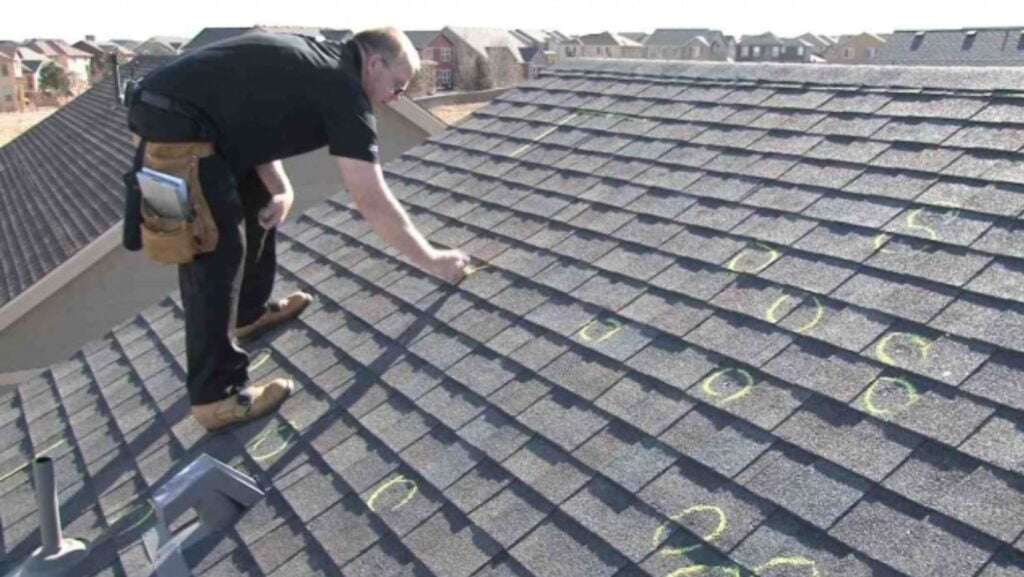
Hail impacts are scattered and random. They do not follow a pattern (unlike foot traffic damage, which concentrates on paths) and can hit any slope. Inspectors typically chalk 10-foot x 10-foot test squares on multiple slopes to document density.
Mat Fractures
Beneath the visible bruise, the fiberglass mat can be cracked. A qualified inspector checks for this by gently probing the bruised area.
Granule Loss Streaks
Dark streaks running down shingles indicate granules have been knocked loose and carried by rain toward the eaves. These streaks point to areas of high hail impact density.
Hail Damage on Other Roofing Materials
- Wood shake: Hail causes splits along the grain, chips at the edges, and dents. Older wood with dry rot is especially vulnerable.
- Metal: Dents are the primary sign. Most dents are cosmetic, but severe ones can crack protective coatings and expose metal to corrosion.
- Tile (clay or concrete): Cracks, chips, and broken corners. Hairline cracks are hard to see from the ground but allow water infiltration.
- Slate: Cracked or broken pieces, especially on older slate with mineral delamination.
What to Do If You Suspect Hail Damage
1. Document Everything Immediately
Before calling anyone, take dated photos and video of the storm aftermath. Capture dented gutters, A/C fins, car damage, and any obvious yard damage. This establishes the date and severity of the storm.
2. Schedule a Professional Roof Inspection
Do not climb the roof yourself — it is dangerous and can actually damage shingles, creating confusion with legitimate hail damage. A qualified roof inspection will document damage using insurance-compatible methods: test squares, close-up photos, measurement of affected area, and a written report.
3. Know Your Claim Deadline
Most insurance policies require hail damage claims to be filed within 6–12 months of the storm date. Some states (Texas, for example) have one-year statutes for weather-related claims. Waiting too long is the most common reason claims are denied.
4. File the Claim
Contact your insurance carrier with the storm date, your inspection report, and supporting photos. Learn the full process in our guide on how to file a roof insurance claim.
5. Get an Independent Estimate
Before accepting any settlement offer, get an estimate from a licensed roofing contractor. Insurance adjusters sometimes miss damage or underestimate replacement costs. An independent estimate gives you leverage in negotiation.
Avoid “Storm Chaser” Scams
After major hailstorms, out-of-town contractors flood the area offering free inspections and quick repairs. While some are legitimate, many are “storm chasers” who use high-pressure tactics, do shoddy work, and disappear before problems surface.
Red flags include:
- Door-to-door solicitation right after a storm
- Pressure to sign a contract on the spot
- Requests for full payment upfront
- Out-of-state phone numbers or no physical office
- Promises to “waive your deductible” (this is insurance fraud)
Always verify the contractor is licensed in your state, check references, and confirm they carry liability insurance and workers’ comp.
Get a Free Hail Damage Inspection
Roofing Quote Today connects homeowners with licensed local roofing contractors who perform thorough, insurance-grade hail inspections — free of charge. We serve communities in hail-prone states including Texas, Colorado, Oklahoma, Kansas, and Nebraska.
Call 844-677-2023 to schedule your inspection, or visit our contact page to get started.